
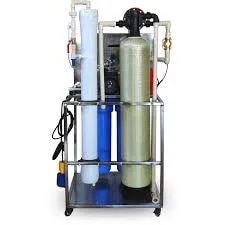
500 LPH RO PLANT
Description
A 500 liters per hour (LPH) Reverse Osmosis (RO) plant typically includes components like a raw water pump, multimedia filters (activated carbon and sand filters), a high-pressure pump, RO membranes, and a control panel. Specifications vary by manufacturer, but generally, these plants are designed for brackish or slightly contaminated water, with a maximum Total Dissolved Solids (TDS) level of around 2000-3000 ppm.
Here's a more detailed breakdown of the components and specifications:
1. Raw Water Pump:
Purpose: To draw water from the source and feed it into the filtration system.
Capacity: Often around 0.5 HP, with a head of 15 meters (or more), according to some commercial RO plant providers.
Make: Kirloskar or Crompton Greaves are common brands, according to a technical document.
2. Multimedia Filters (Activated Carbon and Sand Filters):
Purpose:
To remove suspended solids, dirt, iron, and chlorine, protecting the RO membrane from fouling.
Media:
Typically include activated carbon and sand, according to some commercial RO plant providers.
Configuration:
Often housed in FRP (Fiber Reinforced Plastic) vessels, with multi-port valves for backwashing.
3. High-Pressure Pump:
Purpose:
To pressurize the water to overcome the osmotic pressure of the RO membrane, ensuring efficient water filtration.
Capacity:
Typically 1.0-2.0 kW, with a flow rate of 3500 liters per hour and a head of 125 meters.
Make:
CRI or Sumo are common brands, according to some commercial RO plant providers.
4. RO Membranes:
Purpose: To remove dissolved salts, minerals, and other impurities from the water.
Type: Typically thin-film composite (TFC) or polyamide membranes.
Size: 4040 (4-inch diameter, 40-inch length) is a common size for commercial RO plants, according to some commercial RO plant providers.
Number: 500 LPH systems usually have two membranes in a single housing.
5. Control Panel:
Purpose: To control and monitor the operation of the RO plant, including pressure, flow rate, and other parameters.
Automation: Can be semi-automatic or fully automatic, depending on the system.
6. Other Components:
Micron filter: To remove finer suspended particles.
Dosing pump: To add chemicals for pre-treatment or cleaning.
Pressure gauges: To monitor pressure at various points.
Flow meters: To measure the flow rate of water.
RO membrane housing: Typically made of stainless steel or FRP.
7. Recommended Conditions:
Inlet TDS: Up to 3000 ppm, according to some commercial RO plant providers.