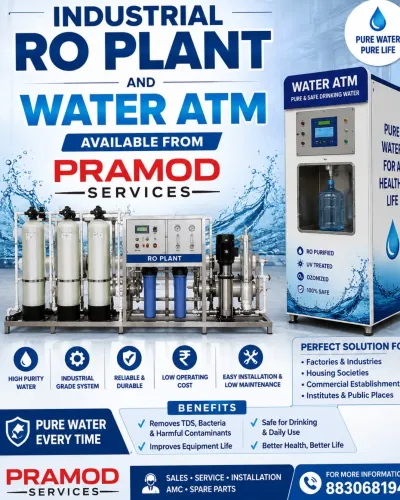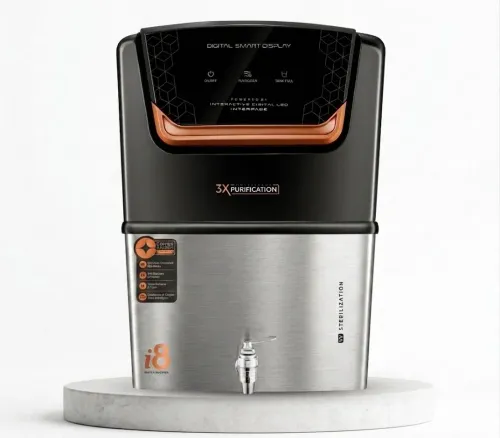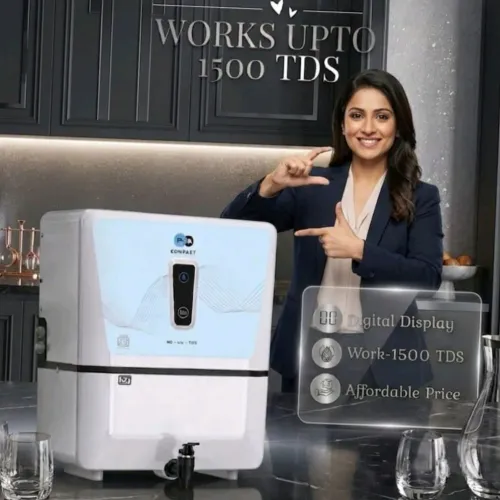

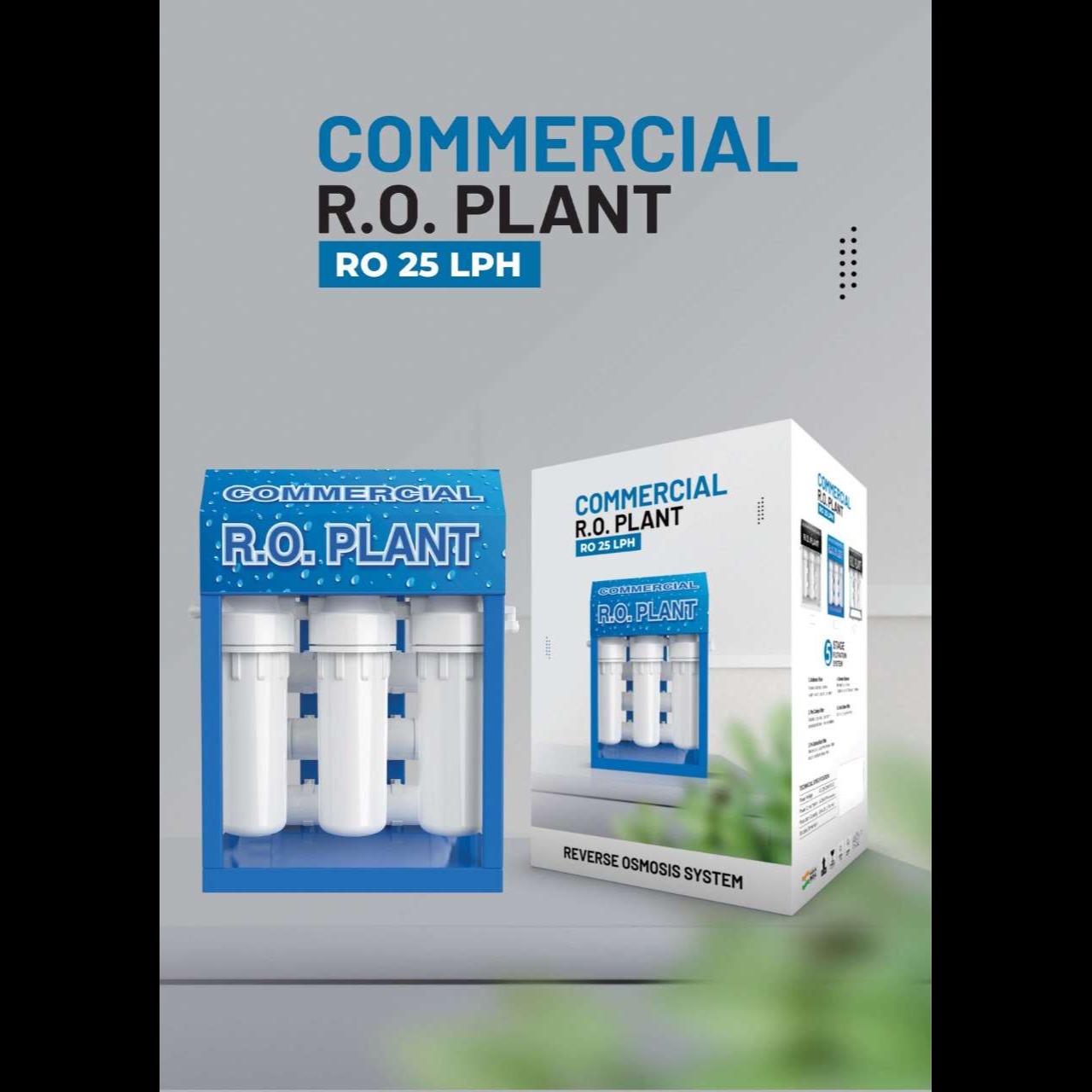
A 25 LPH (liters per hour) RO plant's specifications include a purification capacity of approximately 25 liters per hour, a maximum daily duty cycle of about 150 liters, and a TDS (Total Dissolved Solids) rejection of 90-95%. It requires an inlet water pressure between 0.3 and 2 kg/sq cm, an input voltage of 160-300V AC, and features a multi-stage purification process including Sediment, Carbon, and RO Membrane filters. These plants typically have a compact design for wall-mount or tabletop installation and a power rating of around 48W. Key Specifications
Purification Capacity: 25 Liters per Hour (LPH).
Duty Cycle: Up to 150 liters per day.
TDS Rejection: Up to 95%.
Input Water Pressure: Minimum 0.3 kg/sq cm, Maximum 2 kg/sq cm.
Input Voltage: 160-300V AC (50Hz).
Operating Voltage: 48V DC.
Power Rating: Approximately 48 Watts.
Purification Stages (Typical)
Sediment Filter: Removes dirt, dust, and larger particles.
Activated Carbon Filter: Absorbs chlorine, odor, and bad taste.
Pre-Carbon Filter: Acts as a protective layer for the RO membrane.
RO Membrane: Removes dissolved solids, bacteria, and viruses.
Post Carbon/Mineralizer: Further improves taste and adds essential minerals.
Additional Features & Considerations
Storage Tank: An optional storage tank, often around 7 liters, may be available.
Installation: Can be wall-mounted or placed on a tabletop.
Automation: Many systems include auto-ON/OFF functionality and auto-flushing for membrane longevity.
Compact Design: The plant features a compact design suitable for commercial and light industrial use.
Materials: Depending on the model, the unit may be constructed from Mild Steel or Stainless Steel.